
Info
Available Products
Card Blogs and Forums
Card Manufacturer Links
Card Reference Sites
-

The Hound of the Baskervilles is now well underway, and shipping early Feb. You can see some of the new basic cards above and we have some fantastic inserts, including double relic cards, first edition cuts, autographs, sketches and much much more including out new Glow in the Dark Foil Hound card! Pre orders are open for this set now on the product information page!
Later in February you will also have the chance to purchase our very limited edition Alice in Wonderland foil factory set. These are limited to just 75 sets and will not last long. Each pack will include a full basic set of Alice foil cards, and the production cost and time each set takes to make these is substantial so we are keeping the number of sets limited. More information and images will be out about this soon!
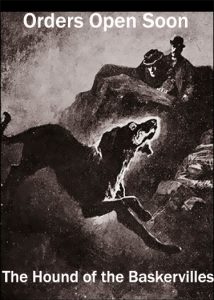
The Hound of the Baskervilles
This new set takes us back on course with the Conan Doyle canonical stories. Perhaps one of his best known and most popular works The Hound is a prequel story that sets the stage for the return of one of literature’s most beloved characters. Published first in 1901 the story was serialised in The Strand and this card set gets back to basics. It brings together many of the original illustrations mixed with new art and information and some spectacular inserts. We have more of what has been popular, sketch cards, autographs, and artefacts from this tale.
Look for very rare Stamps, coins and now Hound Cuts from the true first edition of this story, along with our new foils, magnets and rare parallels! This is one of the best sets we will ever release. Every pack will come with a complete basic set, two or more chase cards, and at least one premium insert. We are cutting production to just 70 cases worldwide so this is sure to sell out fast. The sets will ship in early February and pre-orders open NOW with a number of options! Link
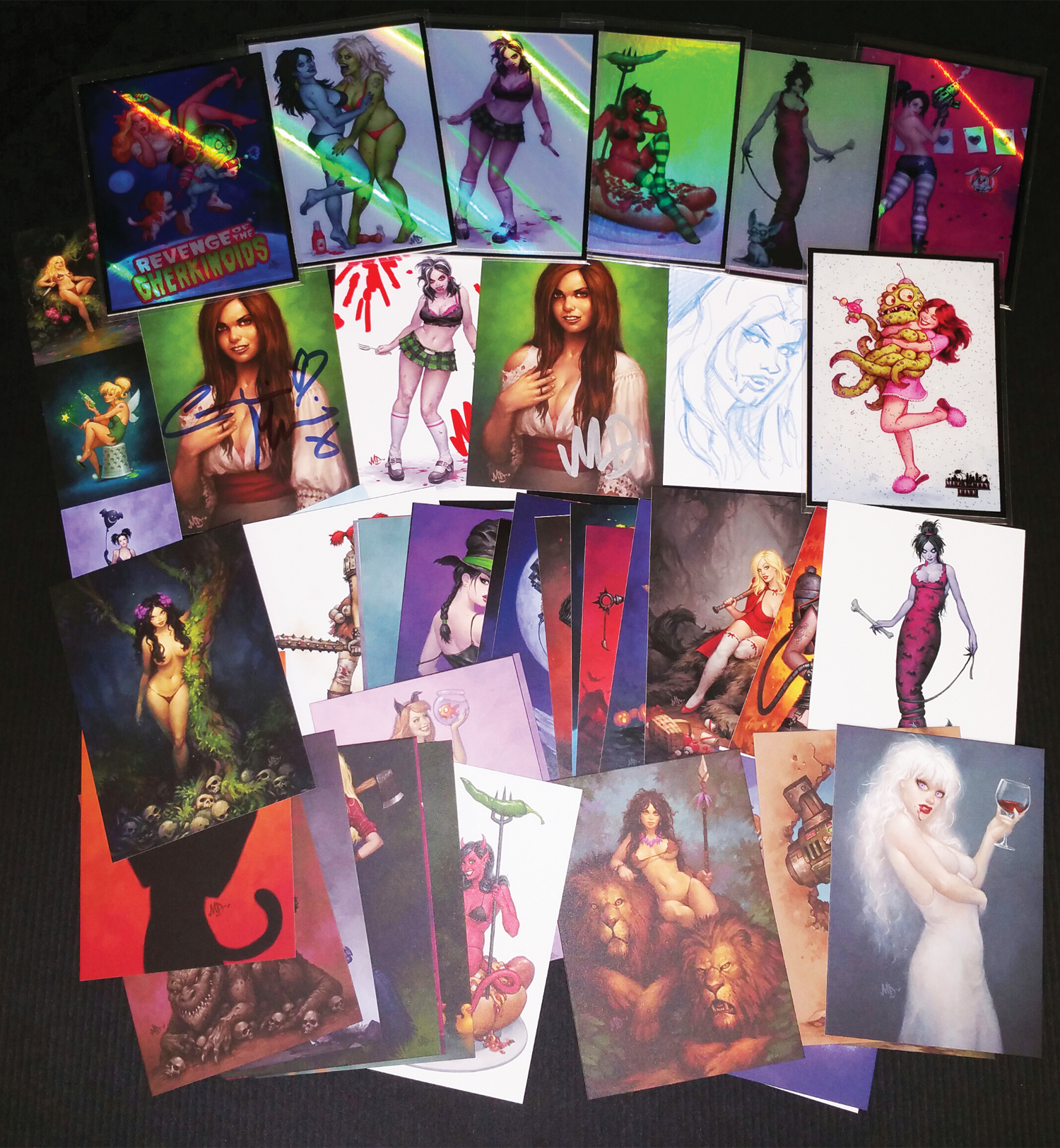 Matt Dixons “Dixons Vixens Master Set” is now available! You can find more information about this set on the Product Information Page but aware while we have made 30 of these fantastic sets, we only have 10 available directly. The other 20 are exclusive to MhopOnHop in the USA!
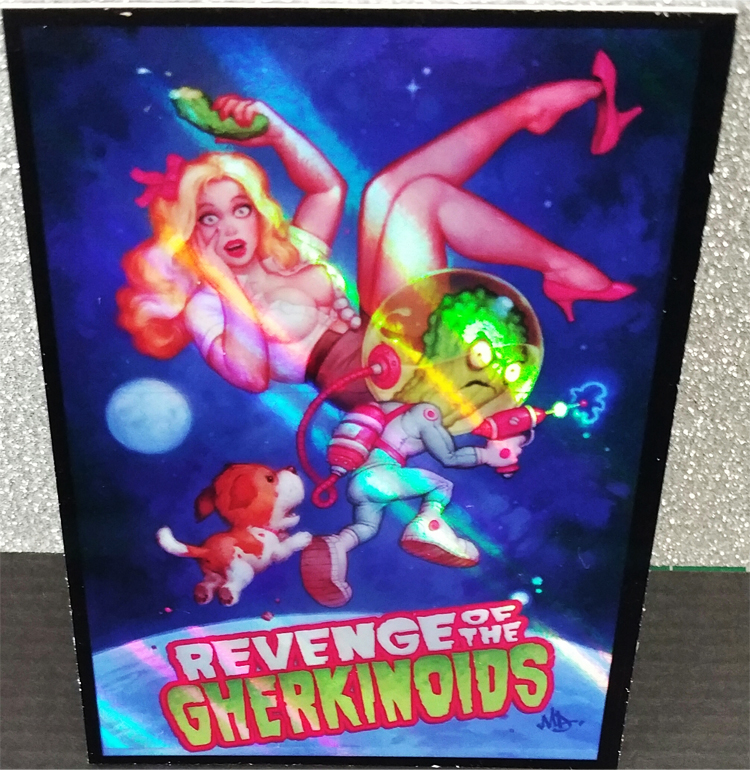
One of the pack inserted foil cards
This list is also at the bottom of the product information page, and we will be adding photos of these cards soon!
Provisional Insert Checklist:
Gold Foil Sherlock Holmes and Victorian Martians Card: 40 in total 2 variations
Silver Foil “Waves” Strand War of the Worlds card: 40
Gold Version of above: 10
Rainbow Foil War of the Worlds Cover Art: 40
Cards Down Under Steel Blue Version: 20
MhopOnHop Silver Version: 20
Mega City 5 Hammered Bronze Version: 25
Sherlock Head with Maritans in Bronze Foil: 20
Mini Logo Foil: 25
Rude Martian foils (three versions): 5 Inserted in error Cards Down Under exclusive
Ultra Limited Variant Cards:
WotW P1 Glitter variant: 80
Scott Fellows Glitter Autograph 40 (Case Topper)
Tentacled Horror Red Eyes Variant: 40
Hack Puzzle Glow in the Dark Backs 30 sets of 10
Scientific Torture Glow in the Dark/Glitter: 30
Victoria Q1 Silver Glitter: 30
A Novel Memento Silver Glitter: 30 Gloss: 40
Sketch Your Own blank sketch card: 25
Relic Cards:
Mini Logo Cover swatch: 40
War of the Worlds Cover Swatch: 30
War of the Worlds Inside Page Cut: 20
War of the Worlds Cover and page Dual Relic: 15
2 Penny Blue card: 5
Victorian Post Card Cuts: 40 in 3 Variations
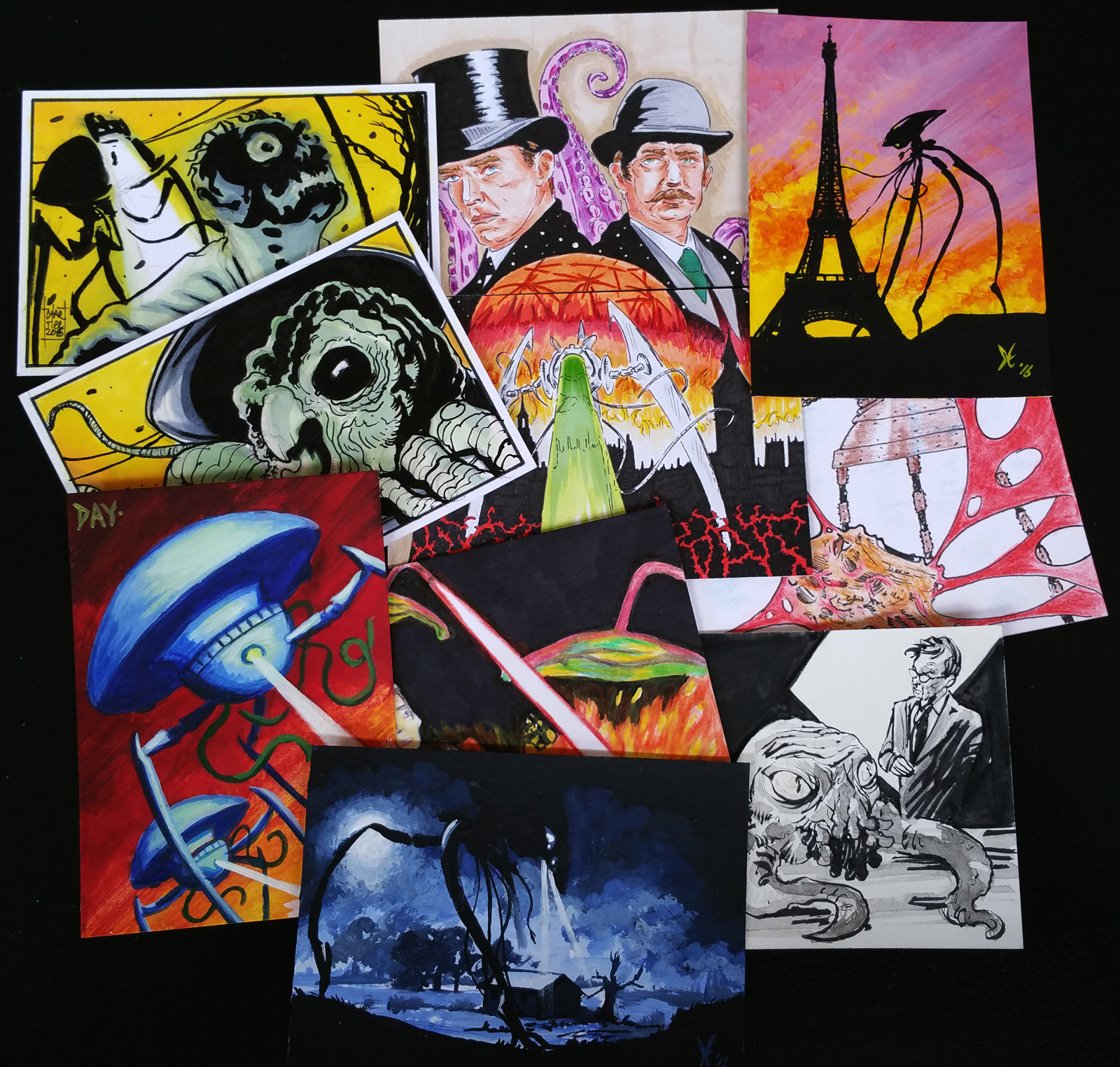
The new Illustrated War of the World’s and Sherlock Holmes and Victorian Martians sets are available to order now from the Product Information Page With new foils, enhanced glow in the dark cards, parallels, variants, textured cards, promos and much more these are going to go quickly. We have a number of very special retail offers available and these sets are shipping in September!
We have some of fantastic new products and a great offer coming out very soon. The Product Information Pages will be created and updated in the next 24 hours and these sets start shipping in early September. Here is some of the key info in advance! As with A Study in Scarlet and The Sign of Four we will again be releasing two sets at once in mixed cases. Each set will have its own easy to identify packaging, along with set specific basic and premium inserts and chase cards. Every 10 pack case will include 6 or 7 sketch cards split over 5 of each of the following packs:
Sherlock Holmes and Victorian Martians
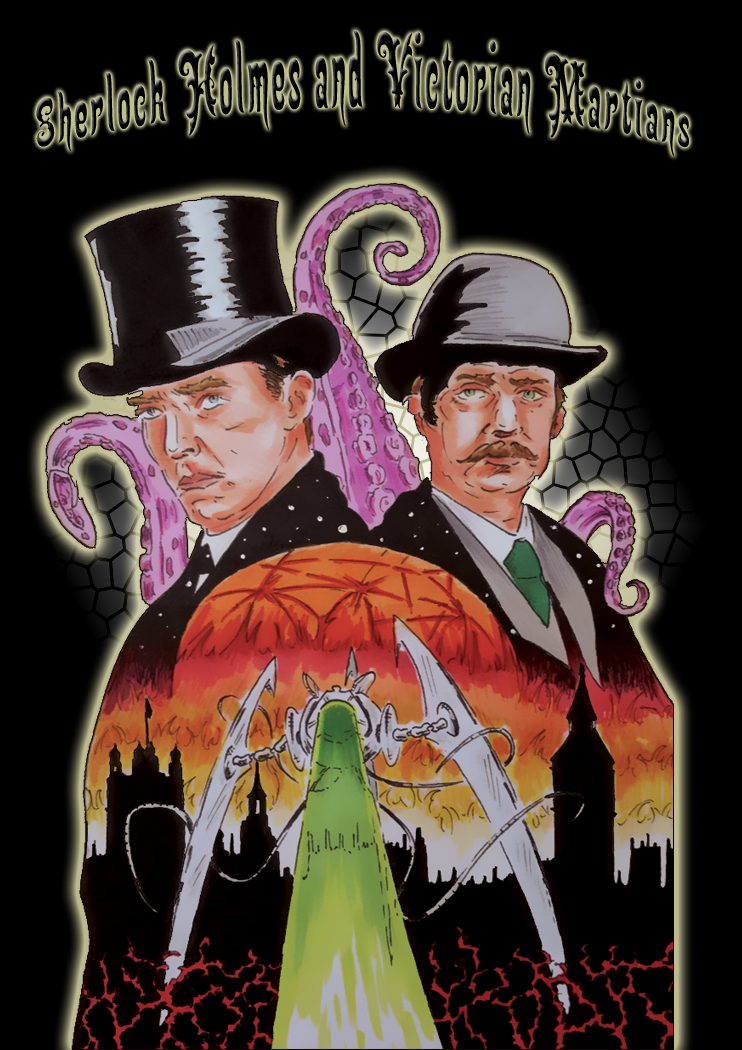
This is a fantastic long awaited follow up to our first ever release. This limited edition set will merge War of the Worlds with our non-canonical Sherlock Holmes world. Icons of the Victorian era are pitted against the villainous murdering Martian invaders with artistic results. This is an extremely limited product, each pack will include a premium insert a chase card and basic cards. The basic cards include some of the hard to find Sherlock Holmes and Victorian Crime expansions from other sets along with new never before released cards! The premium inserts include sketch cards and Victorian artifact cards. Seeded within 5 packs you will find 5 ultra rare Two Penny Blue stamp cards.
The Illustrated War of the Worlds
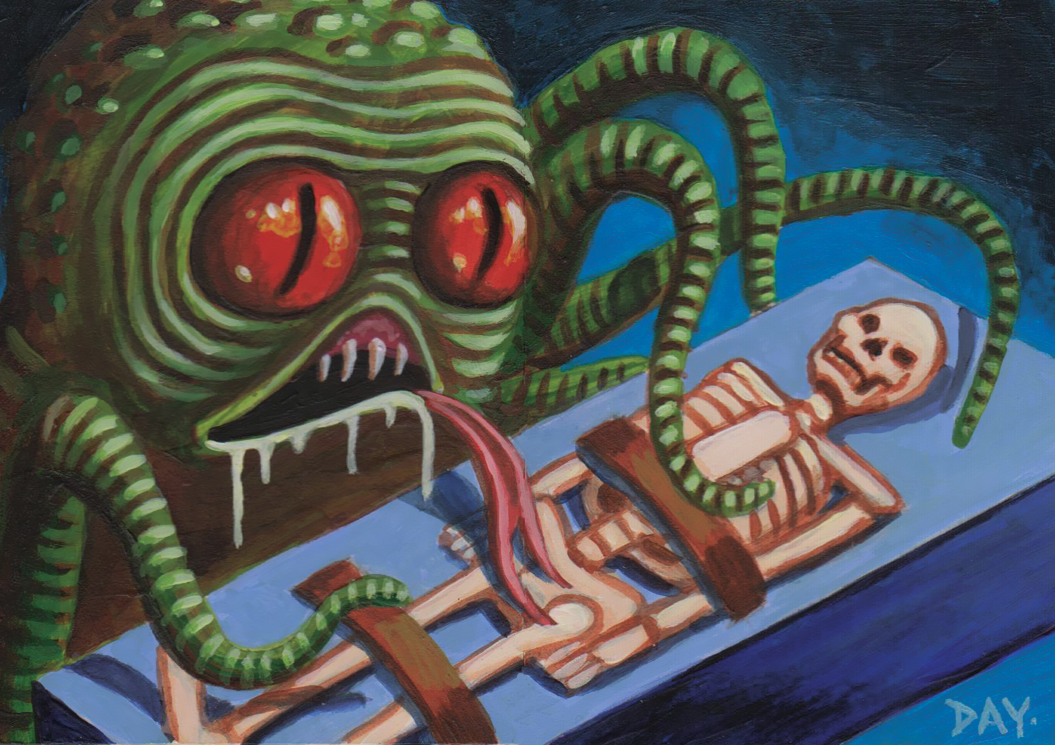
This new set features amazing art work. It takes the War of the World’s away from the strict confines of H.G. Wells story and time period and allows much more artistic freedom to our illustrators who have done us proud. The Illustrated War of the World’s includes a 9 card basic set (along with a gloss parallel chase cards) with the next 9-18 cards for release in series 2. Every pack will include a premium insert, basic set and chase cards. The production run is very limited and and some packs will include original basic card art!
WWI The War Illustrated Premium Pack
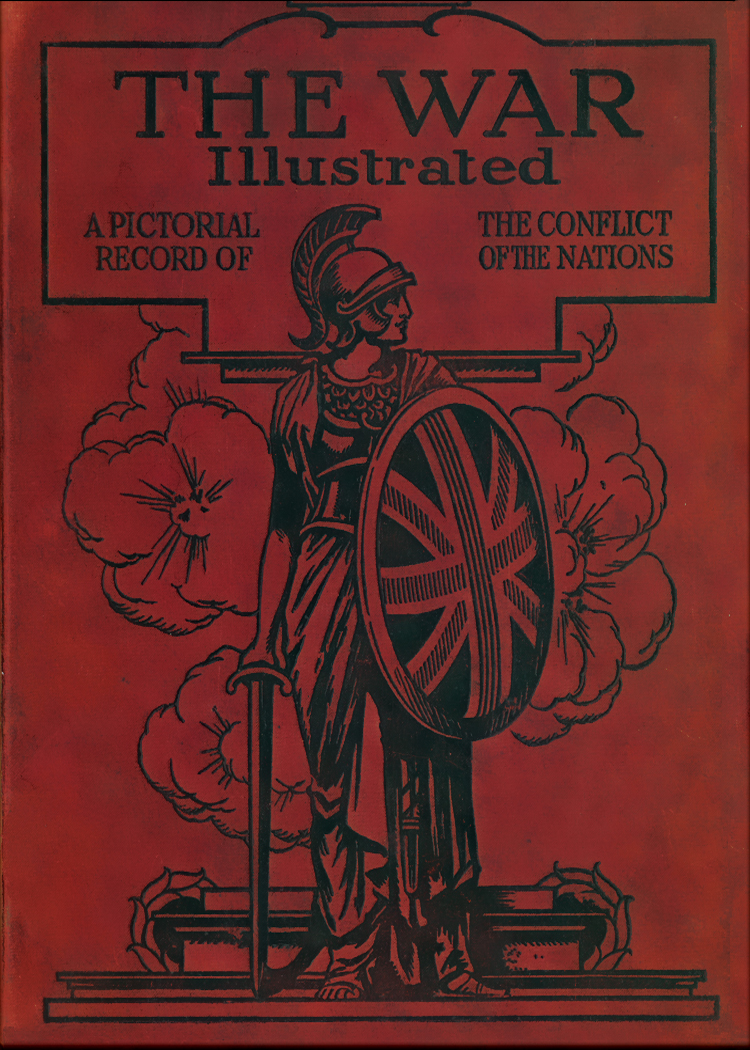
We are also offering an extremely limited War Illustrated Premium Pack. Each pack will include at least three premium inserts, one of which will be a sketch card from one of just three illustrators who participated on this project, along with artifact cards from WWI and WWII and rare military promo cards from our archives. These packs are strictly limited and numbered to just 35 worldwide. These will be available to order from Friday the 26th of August. The illustrators who worked on the set and the number of cards produced is as follows: Francois Chartier (19), B Jones(5), and Carolyn Edwards (11) We will try to make sure those who order more than one pack receive sketches from different artists, while stocks last! 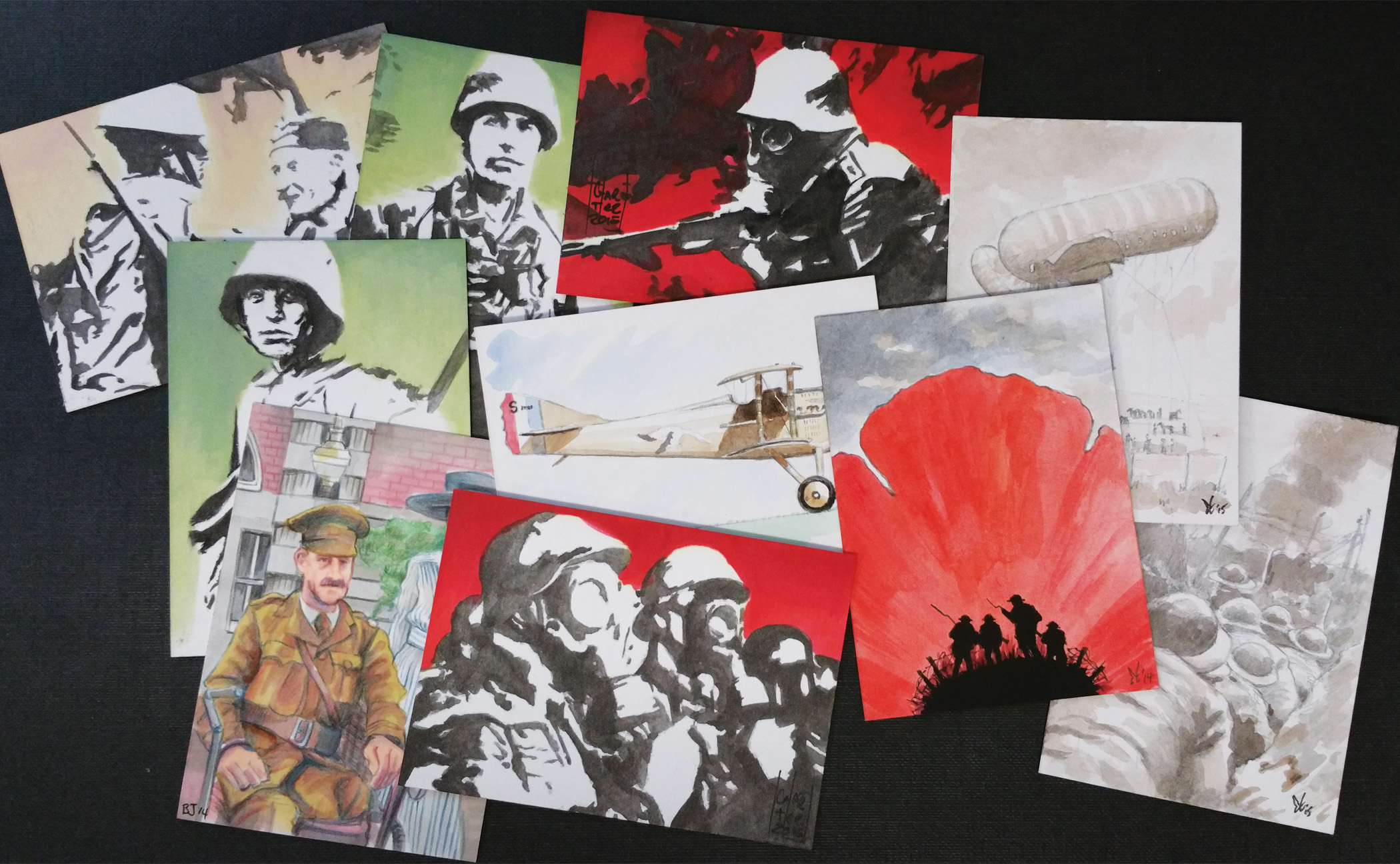
It’s been a long year and it’s not over yet. It’s safe to say we have had a challenging time recently in a very volatile market. The short version of events is as follows: We have had our website hacked a number of times, had problems with delays, artist payments, printing, emails ect. along with a fiasco dealing with binders that just never happened (yes we are still working on these and they will be out for the Hound of the Baskervilles set) and debated just shutting down completely, as many others already have. Thanks to a number of very loyal customers and patient illustrators we are fixing all of these issues and will be putting them very much in the past. The site is back up and running emails are starting back up and projects are being completed. If you’re waiting on sets AP’s or products then be aware we are clearing a backlog of these now. I can tell you now we have had major issues, but rather than run away from these we are working to fix them. We have a new product that will launch shortly and that will pave the way for a number of new sets in the 4th quarter of this year and the beginning of 2017. Thanks for your patience and continued custom, every order helps and we will be adding a few freebies for all our late orders and any new ones we receive for the next month, including rare or exclusive promos, inserts, basic or chase sets, proofs or anything else we can wedge into an envelop or box.
Later this week we will release info on our very limited (already printed) new set which will be released and shipping in the next 14 days.
Happy New Year everyone!
This long post will layout some basic updates a TON of new information about what you can expect from us this year.
All the recent Sherlock Holmes packs have shipped and we have been getting emails from those who have already had the cards. Feedback has been positive, and while the delays are problematic it seems splitting the packs into different sets has been a big hit with collectors. We did scrap a planned Christmas miniset in order to focus on getting Sherlock shipped out to everyone, so if you don’t have yours then dont worry it’s on the way! I hope you all enjoy the unannounced extras we put in including a bunch of cut signatures from some great actors! I have included some images of a few inserts now that everything is shipping!
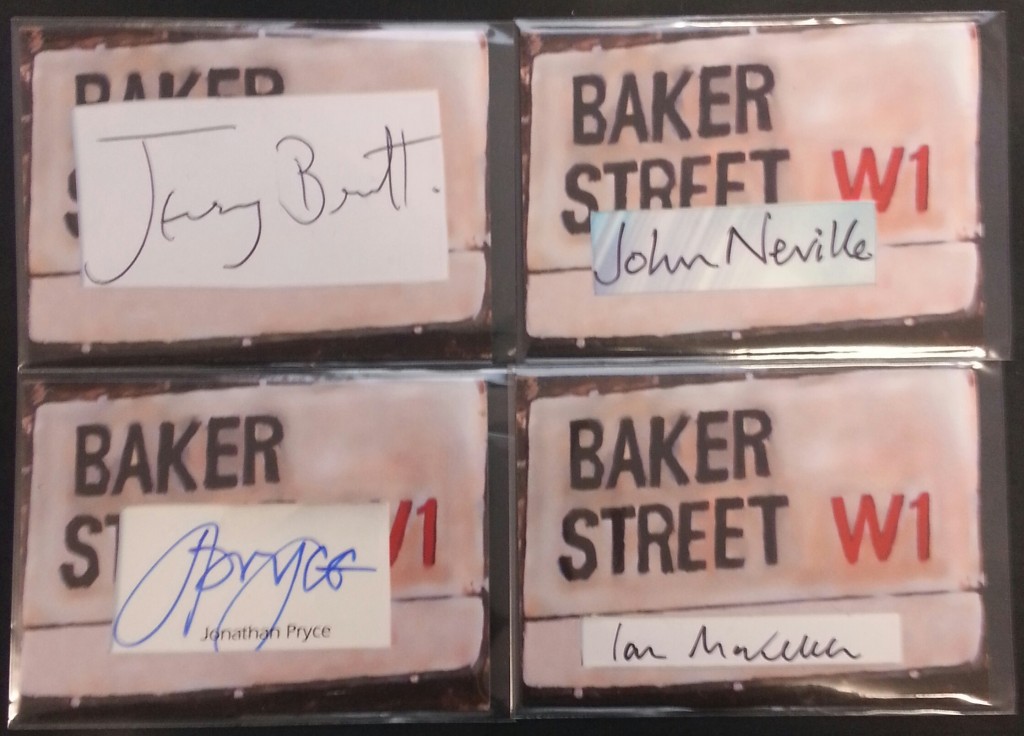
some of our pack inserted Cut Signatures
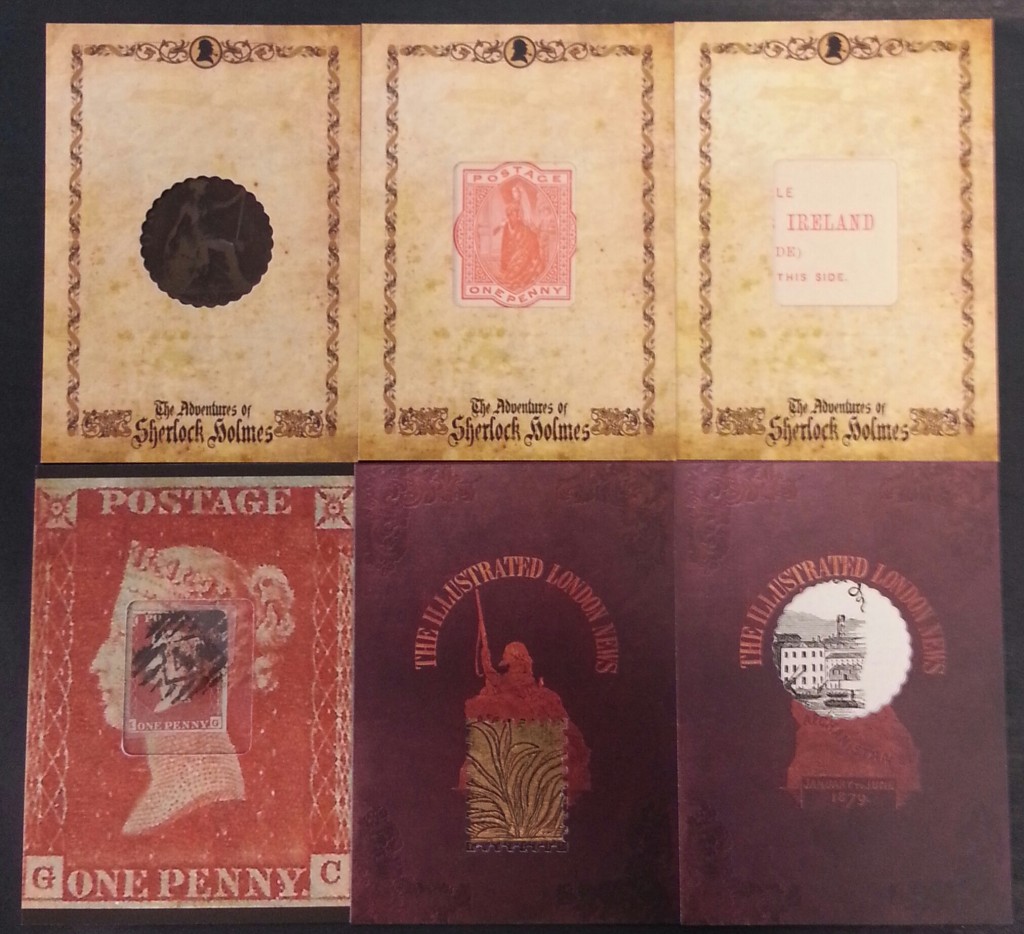
From right to left some of the very limited inserts: Coin inset card, Postcard label card, Postcard text card, Numbered Penny Red, London News Cover Foil and London page inset.
2016 is going to be a busy year for us and we are making a lot of changes to the number of sets we release and the way in which we release them. We are producing more sets this year than ever before however we have cut the print runs on a number of them in order to create some very limited deluxe sets. Reducing the print runs will enable us to produce a wider variety of sets while continuing to keep the quality high and hand finish our premium inserts. We will of course still be producing some larger sets as well, and we will be reconfiguring some other projects into more popular formats.
The Sherlock Binders are nearly finished and will be shipping asap, we really are sorry about the delay folks but they all needed new internal mechanisms to make them compatible internationally. That work is already underway.
Our first product of 2016 is one of the rarest, this is a pack of cards including in house designs, previews, variants, promos, proofs and mockups from all our sets this year. The cards included in these packs are very limited, unreleased or are variations that will only be released in this preview pack. As much as I would love to do a lot of these we can only really offer 50 packs because the cards we include are not produced in high numbers. This includes magnetic proofs from several upcoming sets, a blank sketch sample from one of our upcoming sets, a variant sample that was produced for an upcoming cancelled parallel set, and some of our test foil back card along with a bunch of other goodies. 20+ cards many of which will never be released outside of this set and any overprints are being pulped. The majority of our basic and chse set for 2016 have already been printed in part so we have some interesting oddities to include.
We are also including an exclusive Hound of the Baskervilles Memorabilia Promo card that you will not find anyplace else in each pack along with a signed letter detailing some of what you will find in the packs and this year. These will cost £50.00 a pack but they will have a lot of very bespoke hand finished items included.
These will be shipping from the Tuesday the 12th of January and you will find pre-orders can be made on the Product Information Page
A sample of the final product!
Shipping in January, this set is limited to 500 and more information can be found on the product information pages which is now live.
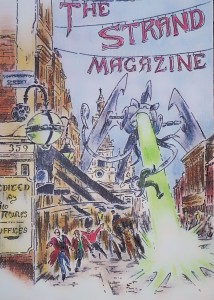
Scott Fellows new Strand Cover
This is the long awaited follow up to our first ever release. This limited edition set will merge War of the Worlds with our non-canonical Sherlock Holmes world. The set will feature fantastic art from some of our hand selected illustrators. We pit the Great Detective and a few others from the Victorian era against the villainous murdering Martian invaders!
Due for release in March/April 2016 This product is Limited to 500 premium sets worldwide.

One of David Days new paintings
Our first War of the World’s releases detailed the original HG Well’s book, this new set removes the restrictions and confinements of that tale and allows an exclusive group of hand selected artists to create lavish War of the World’s illustrations. This new art is no longer limited to Victorian time period and the results are fantastic. With basic cards from David Day this set is limited to 500 and every set includes a sketch from one of our top artists. This set it tentatively scheduled to be released at the same time as our Sherlock Holmes and Victorian Martians project however this is subject to artist scheduling and may be subject to rescheduling by 30 to 60 days.
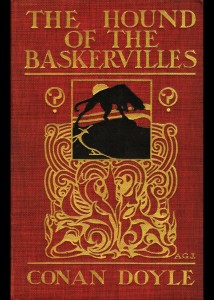
This is a full release and will detail one of the most popular Sherlock Holmes stories ever published. This was the first new story after Sherlock’s apparent death in “The Final Problem” and while it was a flashback story it remains one of the most memorable in the cannon. This 27-36 card basic set will cover the book in great detail, with a host of sketch cards, artefacts, autographs and first edition cuts added into the mix! Limited to 100 cases and shipping in July.
We have some other sets in production including Aly Fell’s own art set “Fell’s Belles” and a follow up to our popular Military Propaganda posters series. We will also be making substantial changes to our WWI War Illustrated sets. We will be combining a number of WWI related projects into a single unified set later in 2016 early 2017. Logistically and artistically it was proving very difficult to produce a small set every year for this, the artists found researching one one specific year’s events to limiting and finding artefacts that could be dated to just one specific year of the war was proving to be not only difficult but far more time intensive than we could justify. By creating a larger set that covers a longer time period we alleviate almost all of these problems which will mean a much better product for the collectors and a much more pleasant creative experience for the Cult-Stuff staff!
In addition to these sets you will also find us hard at work on the first of our line of card games which we hope to have available in the next 18 months.
Our Contemporary Erotica set will be released this year through our Cult Adult brand, more details about that set can be found on the Cult Adult website when it is updated in mid January.
US Distribution:
We have had a fair amount of trouble with our US distribution and I am pleased to say we have been working on a solution to this and we will now be using MHoponHop to help us ship cards within the USA which should cut down on a substantial amount of missing and delayed orders. You can still order directly from us and you will get all our exclusives but if you are in the USA your shipping will arrive via a US carrier. This will also apply to our US wholesale customers who have had a very hard time obtaining our products. I would like to offer specific apologies to Sci-Fi Cards and Enigmazip, we are getting it sorted guys. This new process is being phased in this year and we really hope it will benefit everyone involved.
Sherlock Holmes The Long Stories Volume 1 is now shipping! You will find two different packs, one for A Study in Scarlet and one for The Sign of Four. The binders are delayed, and will ship after the cards, this will of course cost us more, but it is a better option than delaying the set any more! You can see the new sets below, and you will find some fantastic inserts including sketches and autograph cards hidden within the packs!
We have some mystery packs from the NEC show left over as well and they are now on the 2015 mystery pack page! In the next few days you will also find details of our final Christmas offering as we get ready for a host of new sets coming out next year!